IS Saying "O.M.G." Wrong?

I received the following question from a subscriber
to our website:
____________________________ Hi Randi, One final thought: It is also important to remind children that even when we sin, there is forgiveness through Jesus Christ. Copyright 2021 Sarah Keith
You can make a
difference!
"Hi Sarah, I live near many children playing and the phrase
"OMG" is a habit I cringe at hearing. When a child uses the Lord's name as a swear word (or even an adult) I cringe. What do you and your followers have to say in response to hearing someone cuss like this? What should our response be?"
~ Randi G.
Your question is a good one! I agree that hearing that phrase is cringe-worthy and offensive.
As for how we should respond, we could offer a stern correction, but would it be received? Another question to consider is whether we have a relationship with the person. If not, we may first need to earn the right to be heard by showing genuine care and kindness. Whatever approach we take, our goal should be to speak the truth in love and ultimately point people to Jesus. Amen?
With children, you might ask something like this:
Would you ever use your mother's name that way? (They may not understand, so elaborate.)
Would you ever say, "Oh my mother!" when you're surprised or frustrated?
(No.)
Why not?
(Shrug.)
Because that would be disrespectful, right?
I bet you didn't know that saying "OMG" breaks one of the Ten Commandments.
Really?
Are you familiar with the Ten Commandments? God gave them to help us know right from wrong. The Third Commandment says, "You shall not take the name of the LORD your God in vain." That means we should not use God's holy name in a meaningless or careless way. God loves you and me, and because of that, we should honor Him with both our words and our actions.
You might also have the opportunity to explain that we can misuse God's name not only with our words, but also by the way we live, treat others, and make decisions. As God's children, we are His ambassadors—we represent Him. I explore this idea more fully in
God's Top Ten, the
following is an excerpt from Lesson Three:
(Ask) "Why do you suppose God gave us this commandment?" (Allow children to respond.)
Before Jesus came to earth, God's name was considered so holy that many people would not even speak it. When they wrote His name, some would omit a letter, writing it as "G-D." (Some people still do this today.) They did this to show honor and reverence for God.
We should honor God as well because He created us, loves us, and deserves our respect. One way we do that is by not misusing His name.
Most people recognize that using God's name as a curse word is wrong, but that is only one way His name can be misused. There are many others. Even saying God's name in a sentence that has nothing to do with Him—such as "OMG"—uses His name in a meaningless way. That is what it means to take His name in vain.
Remember, God gave His people the Ten Commandments to teach them how to live as citizens of His kingdom and how to love Him and others. The Law served as a guardian and teacher until Christ came. God promised that under the new covenant He would write His law on the hearts of His people.
The Third Commandment reminds us that both our words and our lives should bring honor to God's holy name.
Jesus died on the cross to forgive our sins and because of Him, we can come to God whenever we fail. The Bible says, "If we confess our sins"—that is, admit to God that we have sinned—"He is faithful and just to forgive us our sins and to cleanse us from all unrighteousness" (1 John 1:9).
If a child realizes he or she has been using God's name carelessly, encourage that child not to feel condemned, but to pray, ask God's forgiveness, thank Jesus for His grace, and ask for His help in honoring God's name with both words and actions.
Amen?
(All of our Bible lessons include enrichment ideas to help children
understand these truths. Learn more
about God's Top Ten. 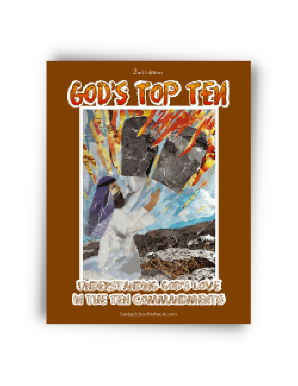
Your purchases
and donations to the site help to distribute
our children's ministry resources to churches across the world.
Subscribe to our Newsletter - Learn More